Showing posts with label infrastructure. Show all posts

ชาวเลราไวย์ ตื้นตัน มีไฟฟ้าใช้แล้ว หลังรอมาทั้งชีวิต “พระครูวิมลปัญญาคุณ (The Solar Monk) ชู โครงการ "ค่าไฟสามบาทใช้ทั้งชาติไม่มีวันหมด" ด้วย Solar Cell ออฟกริด

12 พ.ค.2559 - ProgressTH.org - ชาวเลราไวย์ ตื้นตัน มีไฟฟ้าใช้แล้ว หลังรอมาทั้งชีวิต “พระครูวิมลปัญญาคุณ (The Solar Monk) ชู โครงการ "ค่าไฟสามบาทใช้ทั้งชาติไม่มีวันหมด" ด้วย Solar Cell ออฟกริด แก้ปัญหาสายส่งเข้าไม่ถึง

พระครูวิมลปัญญาคุณ ผู้ก่อตั้งโรงเรียนศรีแสงธรรม บ้านดงดิบ อ.โขงเจียม จ.อุบลราชธานี หรือที่หลายคนรู้จักกันในนามโรงเรียนโซล่าร์เซลล์ จนพระอาจารย์ได้รับฉายาว่า The Solar Monk กล่าวว่า การติดตั้ง Solar Cell จำนวน 3,000 วัตต์ ให้กับชาวเล หาดราไวย์ จ.ภูเก็ต จำนวน 25 ครัวเรือน ที่ไม่มีไฟฟ้าใช้ระหว่างวันที่ 10-11 พ.ค.ที่ผ่านมา เป็นไปด้วยความเรียบร้อย โดยชุมชนแห่งนี้ต้องประสบปัญหาขาดแคลนไฟฟ้าเพราะมีปัญหาเรื่องกรรมสิทธิ์ที่ดินทำให้ไม่มีไฟฟ้าใช้มาทั้งชีวิต
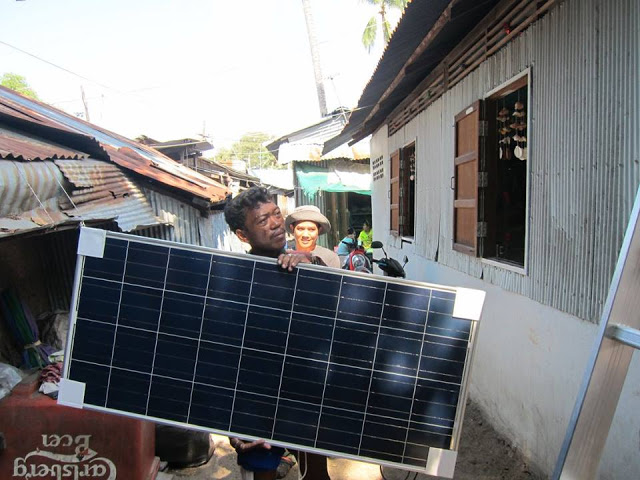

“การติดตั้งแสงสว่างด้วยโซล่าร์เซลล์เพื่อต่อสู้ความมืดมิดครั้งนี้ สร้างความตื้นตันใจให้กับชาวบ้านเป็นอย่างมาก โดยในช่วงเปิดไฟทดสอบบางคนถึงกับน้ำตาไหล เพราะทั้งชีวิตไม่มีโอกาสได้ใช้ไฟฟ้า ต้องซื้อเทียนไขมาจุดเพื่อแสงสว่างวันละ 20 บาท แม้ว่าจะเสี่ยงเกิดอุบัติเหตุเพลิงไหม้ แต่ชาวบ้านไม่มีทางเลือก ต้องอยู่ความลำบากมาโดยตลอด  การที่เราได้มีส่วนช่วยเหลือพวกเขา ให้พ้นความเดือดร้อน และเห็นพวกเขายิ้มได้ ทำให้อาตมามีความสุขไปด้วย ” พระครูวิมลปัญญาคุณ กล่าว


Transforming Our Communities Ourselves With Technology

April 20, 2016 | ProgressTH Many people may mistakenly believe that the future is something that others, like big companies or governments usher in and that they themselves play either a minor active role, or one that is entirely passive. In reality there are already groups of regular people just like you or I around the world literally building the future of their communities themselves with their own two hands and in collaboration with their friends, family, neighbors, and through the power of the Internet, with like-minded individuals around the world.

Instead of some planned community built by government or developers, we can add a layer of opensource technology over our existing communities, on our rooftops, in our offices, and at existing public spaces or markets. In addition to this added layer of physical technology, a little change in our mindset will go a long way in transforming our communities. 
Because of the exponential progress of technology, the impact of small, organized projects is increasing as well. Think about 3D printing and how for many years it remained firmly in the realm of large businesses for use in prototyping. It was only when small groups of enthusiastic hobbyists around the world began working on cheaper and more accessible versions of these machines that they ended up on the desktops of regular people around the world, changing the way we look at manufacturing.

Similar advances in energy production, biotechnology, agriculture, IT, and manufacturing technology are likewise empowering people on a very distributed and local level.

What we see emerging is a collection of local “institutions” giving people direct access to the means to change their communities for the better, bypassing more abstract and less efficient means of effecting change like voting or protesting. 

From Cloud to Field: The Amazing Journey of Irrigation Water

January 12, 2016 | ProgressTH When we see a rice field we may take for granted the amazing journey the water that drives it takes to arrive there. While some fields fill up with the rains and are supplemented with well water or local ponds, the most productive fields are generally fed by national irrigation networks.

We take for granted idyllic scenes of rice farmers tending their crops. Where does the water come from that fills their fields? 
Few know much about the size, complexity, and impact these networks have, but the truth is, the journey this water takes to arrive in a rice field is truly amazing.

Mountain Rains, Reservoirs, and Dams 

Flatter plains where most rice farming takes place, are generally fed by irrigation water that originates high in distant mountains. In central Phetcaburi province, Thailand, farms are fed by several reservoirs located among western mountains both in the province and well beyond it.

แรงบันดาลใจจาก "อาชีวะพระมหาไถ่" โรงเรียนแห่งนี้ไม่ธรรมดา

20 มิ.ย. 2558- ProgressTH (www.ProgressTH.org)- นับว่าเป็นประสบการณ์ที่ดีมากๆ ที่ได้มีโอกาสไปเยือนโรงเรียนฝึกอาชีพเพื่อคนพิการแห่งนี้  หลังจากที่ทีม ProgressTH ได้มีโอกาสร่วมงานกับทางโรงเรียนในการรณรงค์ "ปฏิบัติขนส่งมวลชนทุกคนต้องขึ้นได้" ซึ่งโดยปกติแล้ว หากมีการรณรงค์เรื่องสิทธิคนพิการคราใด  อาชีวะพระมหาไถ่จะเป็นทัพหลักทุกครั้ง

ทั้งนี้ก่อนการเริ่ม workshop 3D Printer เปิดโลกคนกว้างให้คนพิการเมื่อปลายเดือนที่ผ่านมา ทีม ProgressTH ได้มีโอกาสนั่งคุยกับ อาจารย์อุดมโชค  ชูรัตน์ ผู้อำนวยการโรงเรียน และทำให้พบว่าโรงเรียนแห่งนี้ไม่ธรรมดาเลยจริงๆ เพราะนอกจะเป็นเลิศเรื่องการฟื้นฟูคนพิการให้สามารถช่วยตัวเองได้ จนอยู่สามารถมีชีวิตอยู่ได้อย่างสมศักดิ์ศรีแล้ว  โรงเรียนแห่งนี้ยังสอนให้ศิษย์ที่นี่มีจิตสาธารณะด้วย ไม่แปลกใจเลยว่าทำไมจึงเห็นพวกเขาเป็นทัพหน้าผลักดันเรื่องความเท่าเทียมในสังคมเพื่อประชาชนทุกคน


เปลี่ยนความมืดมิดให้เป็นแสงสว่าง จุดเริ่มต้นลดความเหลื่อมล้ำ

26 มีนาคม 2558 - Progress Thailand - ไฟฟ้าเป็นปัจจัยสำคัญที่สุดปัจจัยหนึ่งสำหรับการดำรงชีวิตประจำวันของเราทุกคน เพราะไฟฟ้าเป็นพลังงานหลักในทุกเรื่องไม่ว่าจะเป็นการสื่อสาร การคมนาคม การให้ความรู้ การศึกษา ซึ่งเป็นปัจจัยสำคัญในการพัฒนาเศรษฐกิจ ลองคิดดูว่าสมัยนี้หากไม่มีไฟฟ้า เราจะอยู่อย่างไร

แต่ทว่าในความเป็นจริง ก็ยังมีชุมชน/หมู่บ้าน ในพื้นที่ห่างไกล อีกจำนวนมาก ที่ไฟฟ้ายังเข้าไม่ถึง คนเหล่านี้ต้องอยู่กับความมืดมิด ใช้ตะเกียง/เทียน เพื่อให้แสงสว่าง ซึ่งเทียบไม่ได้เลยกับแสงสว่างที่มาจากหลอดไฟ แต่คนเหล่านี้ไม่มีโอกาสเข้าถึงความสะดวกสบายตรงนี้

ไม่มีโอกาสได้ดูโทรทัศน์ ไม่มีแอร์ ไม่มีพัดลม ไม่มีโอกาสใช้คอมพิวเตอร์/เล่นอินเตอร์เน็ต รวมถึงไม่มีสัญญานโทรศัพท์ ไม่มีโอกาสได้พัฒนาศักยภาพใดๆ เพราะติดต่อสื่อสารกับโลกภายนอกไม่ได้ ชีวิตที่ตรงนั้นช่างแตกต่างกับคนในเมืองยิ่งนัก เราไม่ควรปล่อยให้เป็นแบบนี้ เพราะนี่ คือความเหลื่อมล้ำที่ต้องแก้ไขปัญหาอย่างเป็นรูปธรรม


MIT's Changing Places and the City of Tomorrow

March 13, 2015 -- Progress Thailand The Massachusetts Institute of Technology (MIT) is a world renowned name in research and development in all fields of technology. It has a rich history of not only teaching technology, but also driving it. It has participated in everything from the development of systems used to bring humanity to outer space, to competitions regarding the "inner space" of molecular biology through the annual and increasingly popular iGEM competition.


Currently, their MIT Media Lab is involved in a project known as Changing Places. This project essentially is the rethinking of and experimentation with new concepts regarding how we live and work in cities. In covers everything from living spaces to transportation and even includes research into how to produce food locally, within urban sprawl.

While some of the ideas they are developing may end up informing real-world solutions in the cities of tomorrow, what is more important to take away from Changing Places is the concept itself of people with different backgrounds cooperating with one another to think of practical solutions we can use to shape the environment we live in, and in particular, shape it into the sort of environment we would actually enjoy living in.

District Tech Centers?

February 11, 2015 -- Progress Thailand We've seen several incredible projects headed by equally incredible teams of people working hard to solve real problems with real, tangible solutions. Everything from reducing the costs of and dependency on chemical fertilizers, to bringing electricity and cooking gas to Thailand's most remote regions, to developing cheap, open source tools for precision agriculture, is being worked on and spread across Thailand's 76 provinces.

Small Tech Centers could be established in districts across Thailand with a simple computer and Internet connection and perhaps basic presentation technology to help spread ideas being developed elsewhere in the country without requiring teams and specialists to waste time traveling to all 76 of Thailand's provinces. Eventually, these district experts will make their own breakthroughs, and knowledge will begin flowing both ways.
At least two projects have begun conducting "clinics" where trained professionals travel the country, assisting local communities in the use of technology to improve their lives. Dr. Prateep Verapattananirund has invited us to at least 2 events -- a talk in Chainat and a soil clinic in Saraburi -- to show us the work he and the network he works with are doing. By testing soil samples brought to the clinic for nutrient testing, farmers can finely tune their fertilizer use, usually reducing costs by as much as 50%. 

Proof of concept is no longer an issue. The next step is figuring out a way to spread this technique, as well as finding a way to continuously update and improve the process. Eventually, eliminating dependency on chemical fertilizers altogether may be a possibility, but only if knowledge, news, and techniques can be easily shared.


Transportation for All -- BTS Breakthrough

January 22, 2015 Usually at a court hearing, there is a definite winner and a definite loser. Rarely does everyone walk away better off than when they started. But just such a rare case has occurred in Bangkok, Thailand where a dedicate group of activists fighting for better accessibility for the handicapped won a court decision that will see additional lifts constructed across Bangkok's elevated train system known as the BTS Skytrain.

When the BTS was constructed many years ago, there was an oversight that left many stations without any lifts at all, and many more with just one or two lifts despite multiple entrances and exits on different sides of busy streets and intersections. For years Thailand's handicapped and visitors from around the world would have to brave impassable traffic or haul their wheelchairs up flights of stairs or balance precariously on escalators -- all very difficult even with the help of station staff.

Not only did this pose an extra challenge for people already at a disadvantage, it reflected poorly both on Thailand's mass transportation system and Thailand's attitude toward the handicapped and issues of accessibility in general.

For the BTS, in the wake of this week's decision, this will no longer be the case. The court decision has untied the hands of BTS executives restricted by budgetary and other constraints, and will allow them to join a thankfully growing club around the world that takes accessibility seriously. Not only does full accessibility make a difference in the lives of those confined to wheelchairs or otherwise disabled, it reflects well upon the humanity of those maintaining essential public infrastructure like Bangkok's Skytrain.


Innovative Project Brings Light and Warmth to Remote Village, Literally


January 16, 2015 Travel to the remote sub-district of Pa Deng in Kaeng Krachan, Phetchaburi and you will cross over into an area disconnected from both Thailand's national power grid and telecommunications networks. There are no power lines, no cell towers, and few if any paved roads. The houses are very rustic, and the entire sub-district looks at first like you've traveled back in time.


However, almost precisely where the Ministry of Energy's powerlines end, an innovative project bringing power and cooking gas to this remote region beings. Called the "Pa Deng model," this project involves disseminating solar and biogas technology across Pa Deng. In this "land that time has forgotten," you will see solar panels rising up next to old wooden houses and biogas balloons sitting out back like giant pet dragons sleeping.  

Started independently by a small team including an employee of the Ministry of Energy, the Pa Deng model seeks not just to hand out technology to users, but to teach them how to use it, modify it, and adapt it precisely to their needs.  Rather than being "off grid," Pa Deng is building their own grid. Instead of being connected by powerlines and utility meters, it is instead connected by knowledge and technical and social collaboration.

What one will notice upon traveling about in Pa Deng is the wealth of information everyone involved in the project possesses, from the project team itself to the end users. Farmers employing solar energy and biogas were able to explain at length the process of trial and error they went through to create viable systems that met their daily needs. In fact, many volunteers helping the Pa Deng model team were local end users. 

Accessibility + Mass Transit in Bangkok

Modern, convenient, and efficient, Thailand's MRT mass transit system is a blessing to millions of commuters and tourists who use it every year. To those in wheelchairs, the elderly, or recently injured, the stairs pictured above pose a formidable obstacle. What can we do to help them cross this obstacle?

January 12, 2015 A nation's mass transportation system is a source of national pride. In many countries, these systems can even be seen featured on currency. They are modern marvels of engineered infrastructure contributing to the convenience and prosperity of the people and businesses that use them. But what about people unable to use them? What about their convenience and prosperity? 

Today's event at the Thai Health Promotion Foundation (สสส).
That was the question brought up at today's meeting held at the Thai Health Promotion Foundation (สสส). Bangkok has a very decent and growing mass transit system both in the form of the BTS Skytrain and the MRT underground. These two train systems intersect and compliment each other, and for those able to access them, they are an irreplaceable means of traversing the city.

But for those bound to wheelchairs or otherwise unable to negotiate the stairs and escalators greeting commuters at BTS and MRT stations, accessibility is a serious problem.